How the Casino Became a Public Entertainment Image
Trace how the casino public image developed through dated entertainment and publicity, while separating those cultural shifts from claims about Quy Nhơn.
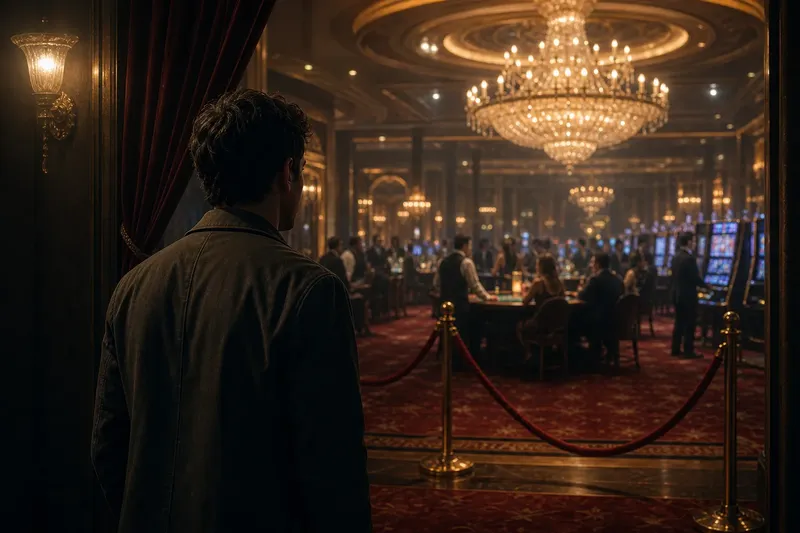
The common mistake in tracing the casino public image is to treat a familiar scene as evidence of a particular place. That shortcut can turn a stage set or advertisement into a false local history, and it hides the dated examples needed to show how the image changed. For Quy Nhơn, keep two questions separate: how entertainment presented casinos to the public, and what records establish about the city itself.
A chronology is possible only when identifiable sources can be placed in time. A novel, performance or advertisement may show how gambling and sociability were imagined; it cannot, by itself, establish that a casino operated in Quy Nhơn. Follow the evidence item by item rather than supplying missing dates with a generic picture of casino life.
Dated sources show how the casino public image changed
To trace a public image, compare materials from different dates and record what each one actually presents. A written account may explain a game or dwell on the room. A play may turn gambling into a setting for ambition or deception. Publicity may place gaming beside dining or music. These forms can be compared, but they do not automatically establish a sequence of influence.
A useful chronology needs dated, identifiable examples: for instance, a publication with a clear issue date, a playbill tied to a named production, or an advertisement whose publisher and date can be checked. Look for changes in emphasis across the material. Does one item foreground the rules, while a later one presents the casino as an evening out? That contrast supports a claim about representation, not necessarily about what visitors experienced.
Begin with the date and provenance of each item; leave gaps visible rather than smoothing them over.
Written accounts show what readers were invited to imagine
A travel narrative, a novel and an advertisement may all describe a gaming room, but they do different work. A travel writer addresses readers considering a visit; fiction uses a setting to serve a plot; advertising seeks attention. Their descriptions are not interchangeable records of everyday activity.
For each text, note its title, date, publication and intended audience when those details are available. Then separate what it states from the impression it creates. A vivid description can tell us what a writer wanted readers to picture without establishing how a real venue operated.
Ask what the text makes visible, and what its purpose leaves outside the frame.
Performance turned the casino into a dramatic shorthand
A gaming table, formal clothes, onlookers or displayed money can suggest risk, wealth, status or deception on stage. Those choices let a production signal a casino quickly, even when it says little about the routines of an actual venue. A dated script, review or playbill can therefore help trace how performers and writers shaped audience expectations.
Describe what the surviving material contains and identify its date and context where possible. Do not turn dramatic shorthand into evidence of a local building or its patrons. A claim about Quy Nhơn still needs material reliably connected to the city.
Publicity linked gaming to a wider evening out
Promotional copy may pair gambling with music, dining or social display. This framing reveals how an advertiser chose to present entertainment to its audience. It does not establish that every visitor took part in every activity, or that the advertised experience matched ordinary use.
Compare the source’s purpose with its claims. An advertisement invites; an official record may document an event or business; a review may judge an experience. Keep claims about access, ownership and local impact tied to evidence that can support them.
Separate the invitation from the record of what happened.
How can dated evidence establish a casino history in Quy Nhơn?
Does a familiar casino scene establish that one existed in Quy Nhơn?
No. A scene in fiction, performance or general publicity can show a cultural convention, but it does not identify a local venue. A claim about Quy Nhơn needs material that names or otherwise reliably identifies the place.
Which local records can help identify a venue?
Dated local newspapers, official documents, business records and photographs with dependable captions may help when they clearly connect to the city and the claim. Check each item’s date, origin and subject rather than relying on a caption or later retelling alone.
How should an advertisement be read as historical evidence?
Read it first as an invitation: note the activities and atmosphere it promotes, then distinguish those claims from independently documented facts. Its language can illuminate public presentation without proving that every advertised feature was available or commonly experienced.
Can fiction contribute to a chronology of casino imagery?
Yes, if the work can be dated and the question concerns how a writer or production imagined the casino at that time. Use it as evidence of representation, not as a direct account of a real venue’s daily operation.
A source-by-source chronology keeps local claims grounded
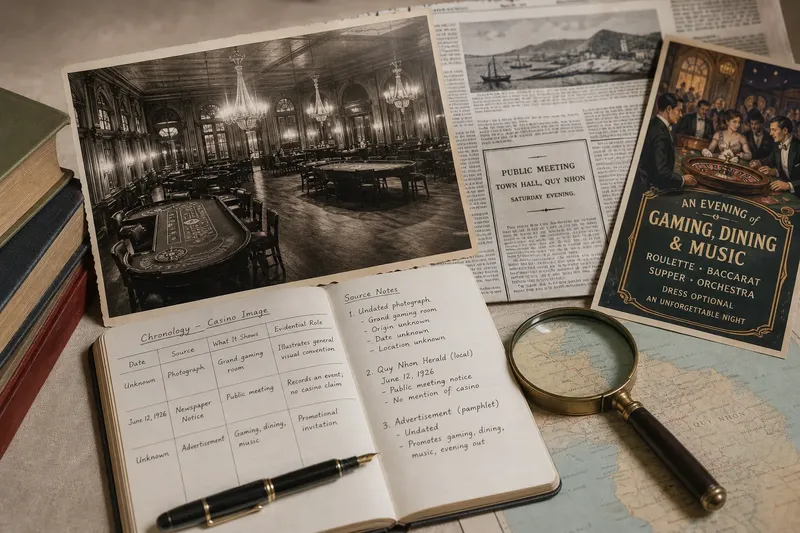
Say you are preparing a short account of casino imagery and Quy Nhơn. Your starting materials are an undated picture of a grand gaming room and a dated local newspaper notice naming a public event but saying nothing about a casino. First, record the picture’s visible details and mark its date, origin and location as unknown. Next, transcribe the notice’s relevant wording and record its publication date and city. Then compare their evidential roles: the picture may illustrate a general visual convention, while the notice supports only what it reports. The resulting decision is clear: neither item establishes a casino in Quy Nhơn, so the local venue claim remains unverified.
A source-by-source chronology makes the casino public image easier to trace without mistaking cultural familiarity for local history. Dated material can show how entertainment presented casinos at particular moments; a claim about Quy Nhơn needs its own local evidence, with the provenance and limits of each item stated plainly.