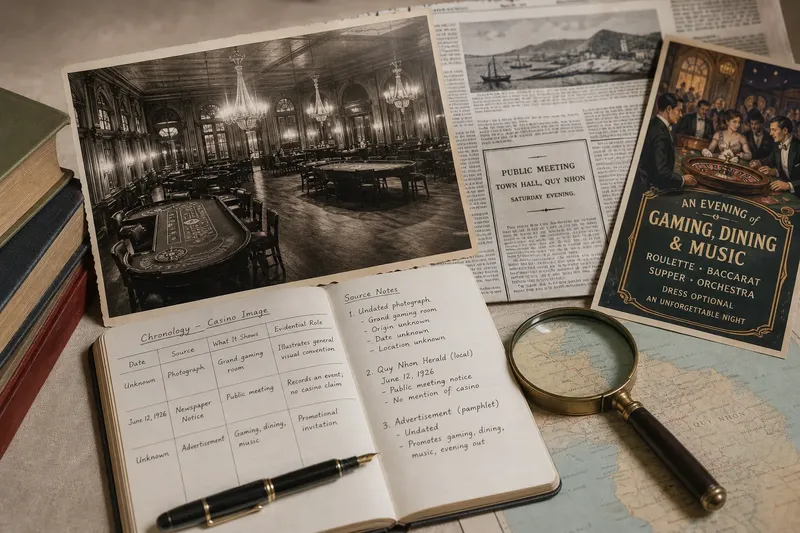
The Screen Casino Is Not a Map
Screen casino scenes use camera, sound and setting to shape a story. Learn how to read their language without mistaking dramatic imagery for local life.
The most common mistake with a screen casino is to treat its imagery as a record of Quy Nhơn. That costs viewers a useful distinction: the scene may tell us how a story frames risk, status or spectacle, but not how the city itself is experienced. Read the casino as a piece of visual language, and ask what that language is doing.
Screen casino imagery turns space into a symbol
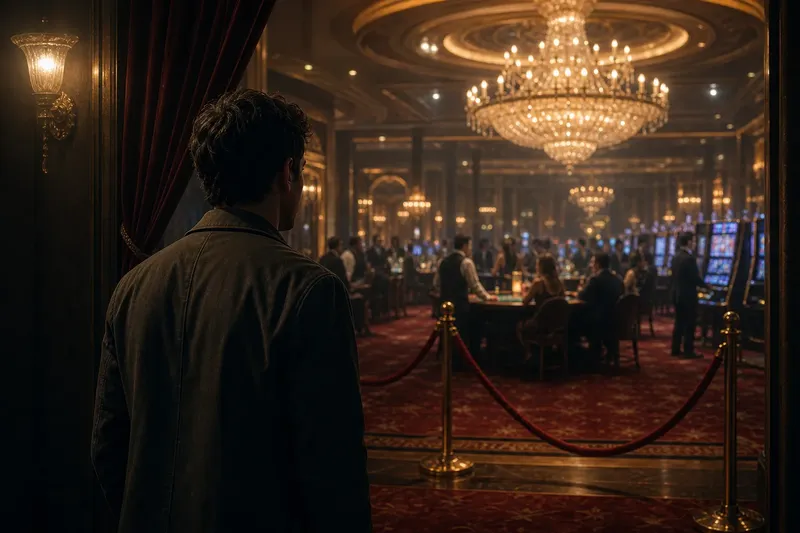
A felt table, a velvet rope or a glittering entrance can stand for access, temptation or social distance. The meaning depends on how the scene arranges those details. A rope may suggest exclusivity in one story and comic fussiness in another.
That symbolism belongs to a broader screen vocabulary. The same velvet rope might appear outside a nightclub or a theatre; the casino setting gives it a particular context, but does not make it a statement about Quy Nhơn. Describe the detail and its effect before attaching a larger meaning to it.
Ask what the room represents in this scene, not what it supposedly says about a city.
Camera, sound and editing guide the viewer’s attention
A close-up of chips can make a small movement feel momentous. A wide shot may dwarf a character beneath chandeliers, while a cut to a silent reaction can suggest unease. Music and lighting reinforce those choices: a bright, quick sequence can feel buoyant, while a low hum and deep shadows may lend the room a more watchful mood.
Editing also decides what counts as the scene. A film might move from a character’s arrival straight to a tense exchange, leaving out the ordinary transitions between them. That compression is a storytelling choice. It can create pace without offering a complete picture of the place on screen.
Notice which sound or image first steers your response, then check whether later shots support or complicate it.
Costume and movement shape a character’s position
Clothing, posture and movement can make a character seem at ease, cautious or out of place. Someone who enters without hesitation is framed differently from someone who pauses at the threshold. The scene gives those gestures meaning through performance, camera position and timing.
Props can work in the same way. An untouched glass might imply distraction; a hand held above the table can stretch a decision into suspense. Neither detail tells us how real visitors behave. It shows how the production wants us to read this particular character.
Imagine a fictional drama in which a newcomer in a plain jacket pauses under a chandelier, watches the room, then approaches a table. The pause and costume make the character appear guarded beside the ornate setting. If the scene instead used a brisk entrance and a cheerful soundtrack, the same room could feel less intimidating; that contrast comes from the production’s choices.
What does a casino scene about Quy Nhơn actually establish?
Does the set identify a real venue in Quy Nhơn?
No, not on its own. A production may use a studio, a location elsewhere or a constructed set, so the image needs separate context before it can be connected to a real place.
Why do screen casinos often feel heightened?
Recognisable props and interiors let a story communicate quickly. Framing, music and performance can then intensify the mood without making the scene a documentary account.
Can a character’s behaviour stand for local visitors?
A character is shaped by the script and performance, so their actions are evidence of a portrayal, not a general pattern. Keep claims about real people separate from discussion of the scene.
How should a clip be captioned or shared?
State what is visible and what the production context confirms. If the filming location is not reliably identified, call it a fictional screen depiction rather than evidence of a venue in Quy Nhơn.
Choose language that keeps interpretation precise
“The series presents the casino as exclusive” describes a narrative effect. “Casinos in Quy Nhơn are exclusive” makes a claim about real places. That difference matters in captions, reviews and social posts, where a confident sentence can travel farther than its evidence.
Say you are discussing an unnamed casino in a fictional series. You note the velvet rope, dim entrance and character waiting outside; then you explain that the staging makes entry feel tense and selective. If no dependable production source identifies the setting, leave Quy Nhơn out of the location claim. If a reliable source names a filming place, report only what it establishes, such as where the scene was shot, rather than treating the image as a portrait of local life.
When discussing screen casino imagery, keep the observation close to what the scene actually shows and name the effect as an interpretation. That small discipline leaves room to analyse the craft without turning a dramatic setting into a claim about Quy Nhơn.